Growing inequality in early childhood education and care: A European perspective

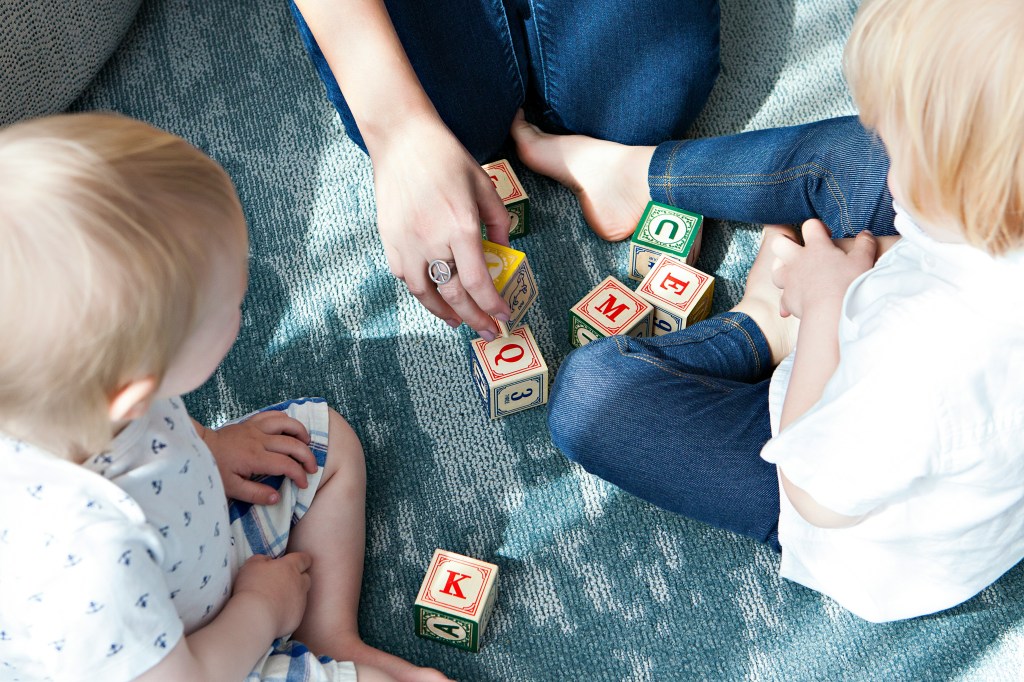
Photo by Marisa Howenstine on Unsplash

Early Childhood Education and Care (ECEC) plays a crucial role in supporting children’s development and enabling parents, especially mothers, to participate in the workforce. Yet, access to these vital services is far from equal across Europe. Our recently published study, “Growing inequality and diverging paths in early childhood education and care: Educational disparities in Europe,” sheds light on how ECEC participation has evolved since the early 2000s and how educational inequalities have shifted over time.

The Expanding Divide

Using data from 21 European countries (2004–2019), we examined how children under the age of three participate in ECEC and whether disparities exist based on their mothers’ education levels. The findings are clear: while overall participation rates have increased, so has inequality.

  • Low-educated mothers are being left behind: Children of mothers with lower levels of education continue to have significantly lower participation rates in ECEC compared to those with medium or high education levels.
  • Widening gaps: The divide between low- and highly educated mothers has grown. In contrast, the gap between medium- and high-educated mothers has sometimes narrowed.
  • A paradox of progress: In many countries, rising participation rates have coincided with increasing disparities, suggesting that universal access is not being achieved equitably.

Policy Matters

Our analysis highlights the importance of policy frameworks in shaping ECEC access. Countries with well-funded, universal childcare systems—like Finland, Denmark and Sweden—tend to have lower inequality. Conversely, countries relying heavily on market-driven ECEC models or lacking sufficient public investment often show greater disparities.

These findings underscore the need to address educational and socioeconomic inequalities in ECEC access. Without targeted policies, such as subsidised fees or guaranteed places, children from disadvantaged backgrounds risk missing out on early developmental benefits. This, in turn, perpetuates cycles of inequality in education and employment.

ECEC is a cornerstone of social investment, with the potential to level the playing field for all children. However, as our study shows, achieving this potential requires addressing persistent inequalities head-on.

You can read the full study here.

Reference: Välimäki Sanni, Lammi-Taskula Johanna, Mesiäislehto Merita & Närvi Johanna (2024) Growing inequality and diverging paths in early childhood education and care: Educational disparities in Europe. International Journal of Comparative Social Policy

Award for best article by Cambridge University Press

Photo by Allan Mas on Pexels.com

One of my main research interests in the past few years has been lone parents’ wellbeing and child support policies around the world, which I have had the priviledge to study with professor Mia Hakovirta and other great scholars working on families’ wellbeing and child support systems. We have published studies on the effectiveness of child support policies in reducing poverty (here), how child support interacts with social assistant schemes (here) and the role of child support in lone mothers’ income (here).

I was honoured to hear that this year Mia and I were awarded with the prize for Excellence in Social Policy Scholarship for JICSP for our article ”Lone mothers and child support receipt in 21 European countries”.

In the article, we studied cross-country differences in the prevalence and amount of child support received, and the determinants of child support receipt among lone mothers across countries. For the analysis, we used 2017–2018 European Union Statistics on Income and Living Conditions (EU-Silc) data.

Our analysis revealed that the proportion of lone-mother families receiving child support varied significantly across countries and a substantial proportion of lone-mother families in the 21 European countries did not receive child support. The highest child support receipt rates were found in the Czech Republic, Denmark and Austria. These countries also had a high gender wage gap, ie. men had higher earnings than women.

We also found significant variation in who receives child support. Socioeconomic differences in child support receipt were generally most marked in countries where child support receipt was less prevalent. Low socioeconomic status was a common barrier to child support receipt in most countries, and lone mothers faced similar challenges in pursuing child support. It may be that when fathers are disadvantaged, they cannot provide economic resources for their children. Thus, it seems that current child support policies work for families with more resources and less well for disadvantaged families. In some countries, the state provides some financial support if a non-resident parent is not paying countries. In these countries, lone mothers are in a better position, as the state provides support in case of non-compliance. Also, expectations for child support may differ in a separated family in which both parents have equal caring responsibilities. In earner-carer countries, equal caring responsibilities between parents combined with equal earning responsibilities mean that the need for financial transfers is smaller.

Interested in knowing more? Read the whole article here

Reference

Hakovirta, M., & Mesiäislehto, M. (2022). Lone mothers and child support receipt in 21 European countries. Journal of International and Comparative Social Policy, 38(1), 36-56.